How to Dispose of Tampons (And Why You Should Never Flush Them)
23 July, 2026

How to Dispose of Tampons (And Why You Should Never Flush Them)
If you’ve ever wondered how to dispose of tampons properly, especially when you’re out at a gym, at work, or in a public washroom with no waste receptacle in sight – you’re not alone. It’s one of those things that rarely gets talked about openly, yet the answer really matters.
For Canadian plumbing systems, municipal wastewater infrastructure, and the environment, proper tampon disposal is a bigger deal than most people realise. This guide covers everything you need to know: what to do at home, what to do in public, why flushing tampons is always the wrong call, and what facility managers can do to make proper disposal easy for everyone in their building.

The Simple Answer: Where to Throw Tampons
The rule is straightforward: used tampons belong in the bin, not the toilet. Specifically, where to throw tampons is in a lined waste bin or, ideally, a dedicated sanitary disposal unit inside your washroom cubicle. Here’s the proper process:
- Remove the tampon and wrap it in toilet paper or the wrapper from your fresh tampon.
- Place it in the nearest bin (ideally a dedicated sanitary disposal bin inside the cubicle).
- If no bin is available in the stall, wrap the tampon securely, place it in a small zip-lock bag or disposal bag from your bag or pocket, and dispose of it in the nearest general waste bin when you leave.
- Never place used tampons in recycling. They are not recyclable.
That’s it. No special equipment, no complicated steps. Just wrap and dispose. The challenge, as we’ll explore below, is that too many washrooms in Canada still don’t make this easy enough.

Why Flushing Tampons Is Always Wrong
Despite what some tampon packaging has historically implied, flushing tampons is never a safe or acceptable disposal method – for your plumbing, for municipal sewer systems, or for the environment. Here’s what actually happens:
In your pipes
Tampons are engineered to absorb and expand. They can hold up to 15ml of fluid depending on absorbency. That same expansion happens in your pipes. As Toronto-based plumbers at True Service Plumbing explain, tampons don’t break down like toilet paper. They get lodged in pipes, catch other debris, and cause blockages that worsen over time. Plumbing callouts to clear tampon-related clogs are expensive (often several hundred dollars or more).
In septic systems
For Canadians on rural or private septic systems, the risk is even greater. Tampons can clog the pipes leading to the tank, disrupt the bacterial balance needed for proper waste breakdown, and ultimately cause the system to back up into your home.
In municipal wastewater systems
The City of Toronto explicitly lists tampons among items that must never be flushed, warning that doing so can cause sewer blockages, basement flooding, damage to wastewater treatment plants, and harm to aquatic environments. Across Canada, municipalities spend significant resources clearing non-flushable materials from pumping stations and treatment facilities. These are costs that ultimately fall on taxpayers.
The scale of the problem is significant: an estimated 2.5 million tampons are flushed globally every day. Many are filtered out at treatment plants, but a significant number end up in waterways, where they contribute to microplastic pollution and harm aquatic wildlife. Tampons contain cotton, rayon, and plastic components that can take years to decompose.

Tampon Disposal at Home
At home, proper tampon disposal is easy to set up. Keep a small, lidded waste bin in every bathroom, lined with a bin bag, so there’s always a clear place to dispose of period products. Bins with lids are preferable for odour control and discretion.
Used tampons go into household general waste (not recycling, not compost). Empty and reline the bathroom bin regularly, particularly during heavier flow days. Some Canadians choose to use a small resealable bag inside the bin for easier, more hygienic emptying.
If you have guests or teenagers at home, a clearly accessible bin in every bathroom (without having to search for it or ask) makes proper disposal the easiest and most natural choice.
Tampon Disposal at Work and in Public Washrooms
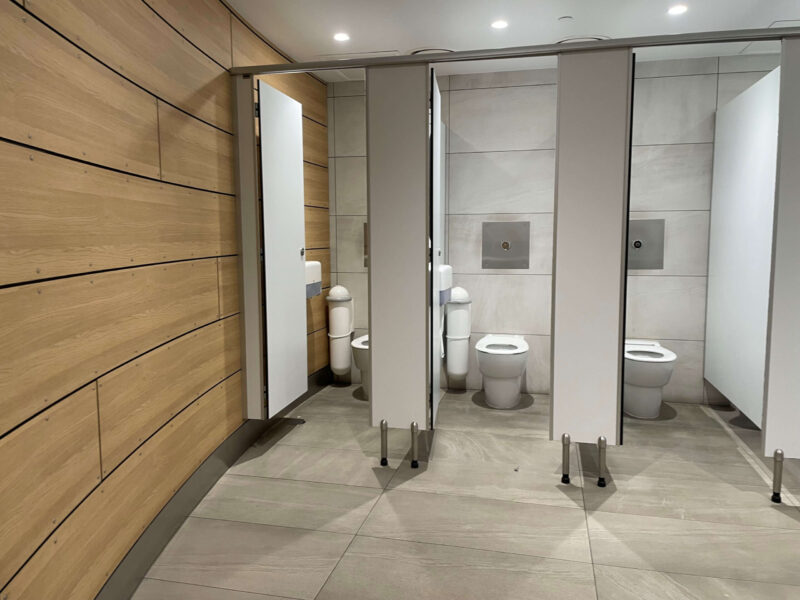
This is where proper tampon disposal gets harder. And it’s not because the process is different, but because too many workplace and public washroom cubicles in Canada still lack a dedicated sanitary disposal unit inside the stall.
When there’s no waste receptacle in the cubicle, users are left with poor options: wrapping and carrying the product out, placing it on the floor, or (most problematically) flushing it. None of these is acceptable. The solution isn’t better signage telling people not to flush. It’s providing a proper disposal unit so they don’t need to.
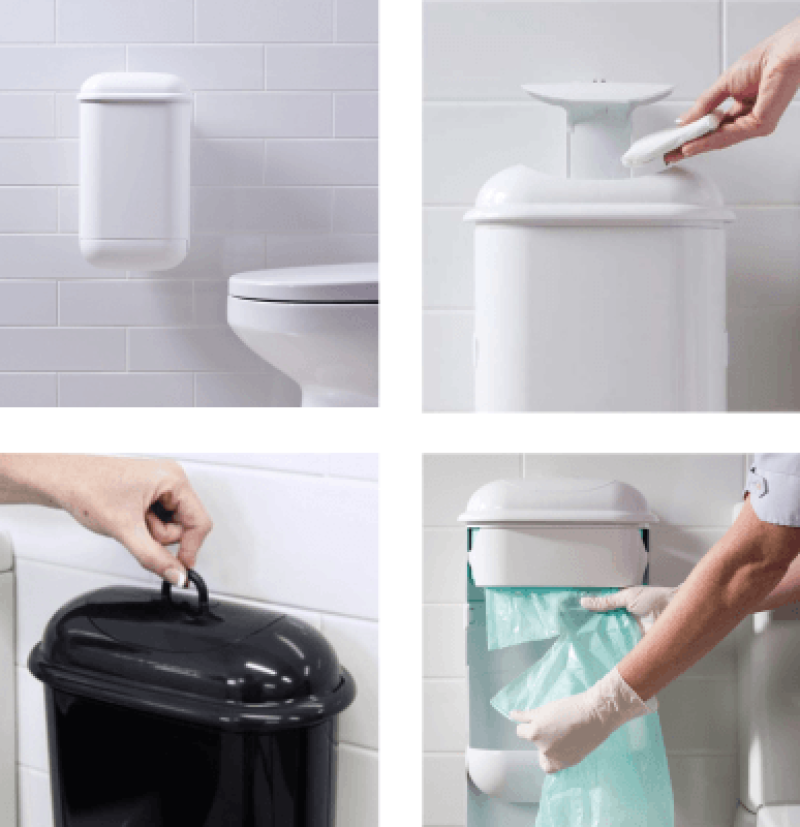
A dedicated sanitary bin inside every washroom stall removes the problem entirely. SaniPod™ Canada’s Pod™ Petite Auto is a compact, touch-free sanitary disposal unit designed specifically for this purpose. It’s discreet, odour-controlled, and easy to service. It gives users a hygienic, no-contact disposal option without having to leave the cubicle.
A Note for Facility Managers and Building Owners
If you manage a commercial building, school, gym, healthcare facility, or any shared space in Canada, the washroom infrastructure you provide has a direct impact on how people manage their periods and on the condition of your plumbing.
Buildings without sanitary bins in every cubicle face a predictable and preventable problem: flushed period products, recurring drain blockages, and expensive plumber callouts. The math is straightforward – the ongoing cost of plumbing issues caused by flushed tampons is far greater than the cost of installing and servicing a proper sanitary disposal solution.
Beyond the plumbing argument, there’s the basic matter of the experience your washrooms provide. People notice when the facilities in a building are well-considered, and when they’re not. A washroom cubicle with no sanitary unit sends a message that the needs of menstruating users weren’t taken into account.
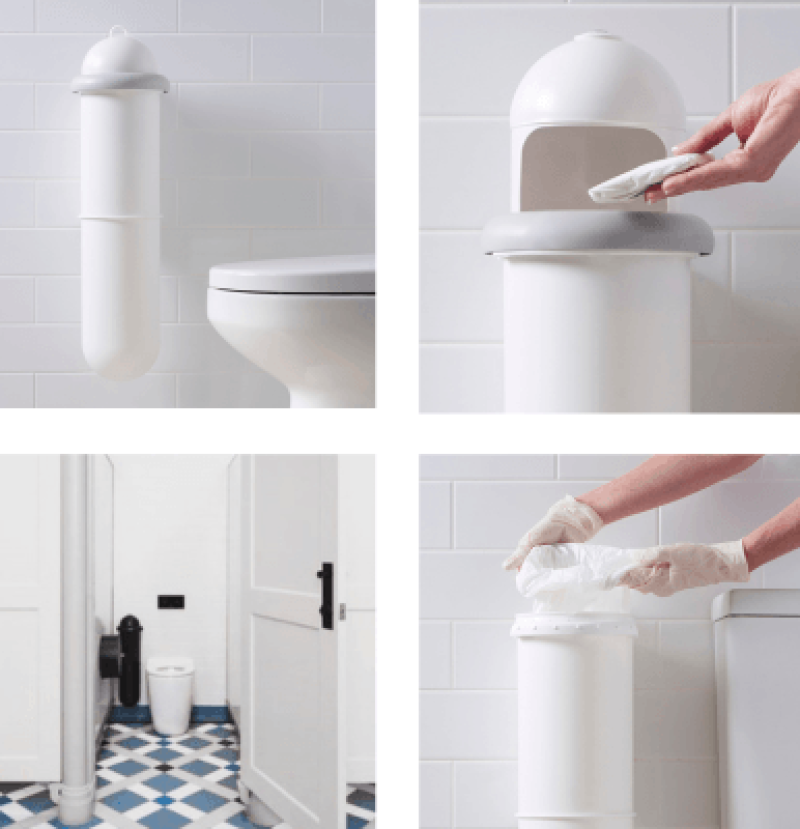
For building owners and managers looking to upgrade their washroom hygiene standards, SaniPod™ Canada offers a full range of sanitary disposal solutions – from compact units for single-stall washrooms to serviced solutions for high-traffic facilities.
The Bottom Line
Proper tampon disposal is simple: wrap and dispose, every time. Never flush, regardless of what a product label may suggest. At home, a lidded bin in every bathroom is all it takes. In shared spaces, it’s up to the people who manage those spaces to provide the right infrastructure. Signage alone has never stopped a blocked pipe.
Whether you’re a student, a gym-goer, an office worker, or someone managing a facility with dozens of washroom stalls, the answer is the same: proper tampon disposal needs a proper sanitary unite. Everything else follows from there.
Explore SaniPod™ Canada’s full range of sanitary disposal solutions for schools, workplaces, and public facilities across Canada.
Chat to us about how our SaniPod™ sanitary units can improve your business
Get in touchProudly used by


