What’s Actually In Your Tampons? A 2026 Guide to PFAS, Dioxins, and Labelling
17 July, 2026
What’s Actually In Your Tampons? A 2026 Guide to PFAS, Dioxins, and Labelling
Questions about what’s in tampons have moved from fringe health forums into mainstream conversation – and for good reason. Over the past few years, a series of peer-reviewed studies have identified heavy metals, PFAS (forever chemicals), and other substances in menstrual products, prompting regulatory attention in the US and growing concern among health-conscious consumers worldwide, including here in New Zealand.
This guide breaks down what conventional tampons are actually made of, what the recent research found (and what it didn’t), and what NZ shoppers should look for on labels when choosing tampon ingredients they’re comfortable with.

What Conventional Tampons Are Made Of
Most conventional tampons sold in New Zealand and globally are made from a blend of cotton and rayon (a synthetic fibre derived from wood pulp), or cotton alone. Rayon is highly absorbent, which is why it’s commonly used in higher-absorbency products. However, it’s also a processed material that can interact with vaginal tissue differently from natural cotton.
Beyond the core absorbent material, conventional tampons may also contain:
- Bleaching agents: Conventionally, tampons were bleached with elemental chlorine, a process that produced dioxin residues. Most manufacturers have shifted to elemental chlorine-free (ECF) or totally chlorine-free (TCF) bleaching. But not all, and labelling is inconsistent.
- Synthetic fragrances: Some tampons include added scent, which can cause irritation or disrupt vaginal pH in sensitive users.
- Plastic components: Applicators (where included) are often made from plastic, as are some withdrawal cords and outer wrappings.
- Pesticide residues: Conventional cotton is one of the most heavily sprayed crops globally. Residues from pesticides and fertilisers used in farming can remain in the finished product.
What the Research Has Found: Heavy Metals
In August 2024, the journal Environmental International published a landmark study by researchers from Columbia University, UC Berkeley, and Michigan State. They representing 30 unique products from 24 brands and found that every single tampon contained measurable concentrations of all 16 metals tested, including arsenic, lead, copper, and zinc.
Both organic and conventional tampons were found to contain heavy metals, which researchers believe may enter products through the soil the cotton is grown in, through processing, or through environmental contamination. The study did not determine whether these metal levels are high enough to cause harm through normal tampon use, and the researchers themselves called for more research.
Meaiti Healtheon Cancer Center’s Dr. Karen Basen-Engquist, a gynaecologic oncologist, noted that it remains unclear whether heavy metals in tampons can leach into the human body under normal conditions of use.
The honest summary: heavy metals are present in tampons. Whether they pose a meaningful health risk through normal use is not yet established. More rigorous, real-world research is needed.
What the Research Has Found: PFAS
PFAS (per- and polyfluoroalkyl substances) are a group of synthetic chemicals used in manufacturing for water and stain resistance. They are known as forever chemicals because they do not break down in the environment or in the human body, and have been linked to cancer, hormonal disruption, immune suppression, and reproductive harm.
Research commissioned between 2020 and 2022 by Mamavation and Environmental Health News, in collaboration with Carnegie Mellon University, found that 22% of tampons and 48% of sanitary pads tested contained PFAS. Notably, 13 of the 22 products that tested positive were labelled as “organic”, “natural”, “non-toxic”, or “sustainable”. This is a sobering finding for shoppers relying on marketing language rather than verified certification.
The concern with PFAS in tampons is compounded by the fact that vaginal tissue is highly permeable. This means absorption potential may be greater than through skin contact. Regulatory limits for PFAS in menstrual products do not currently exist in New Zealand or most other jurisdictions, though California and Vermont in America have now banned intentionally added PFAS in menstrual products effective 2026.
What About Dioxins?
Dioxins became a major tampon safety concern in the 1990s, when it was established that elemental chlorine bleaching of cotton and rayon could produce dioxin by-products. Dioxins are persistent environmental pollutants associated with immune, reproductive, and developmental effects.
The good news: most reputable tampon manufacturers have now moved away from elemental chlorine bleaching. Products that use totally chlorine-free (TCF) or elemental chlorine-free (ECF) processing produce significantly lower or no dioxin residues. The concern today is less about dioxins in most mainstream products and more about labelling transparency – how easy is it to tell, from the packaging, what bleaching method was used?
What to Look for on the Label: A Practical NZ Guide
For New Zealand shoppers wanting to make more informed choices, here are the key things to look for and what they actually mean:
100% certified organic cotton
Means the cotton was grown without synthetic pesticides or fertilisers. Look for certification logos — not just the word ‘organic’ on the packaging.
GOTS certified (Global Organic Textile Standard)
A rigorous third-party certification covering the entire supply chain, from seed to finished product. As Crimson Organic NZ notes, GOTS certification covers freedom from chlorine, toxic heavy metals, and aromatic solvents – and includes ethical labour standards.
Totally chlorine-free (TCF)
Indicates the cotton or rayon was bleached without any chlorine compounds, preventing dioxin by-product formation. Preferable to ‘elemental chlorine-free’ (ECF), which still uses some chlorine derivatives.
Fragrance-free
Fragrances in tampons serve no hygiene function and may contain undisclosed chemical compounds. Fragrance-free is always the safer choice.
Independent lab testing published
A growing number of brands publish independent laboratory results verifying what’s in – and not in – their products. This is the gold standard of tampon safety transparency.
One important caveat for NZ shoppers: the word “organic” on tampon packaging is not regulated in New Zealand in the same way food labelling is. A certified logo from a recognised body (GOTS, OEKO-TEX) carries more weight than a marketing claim alone.
The Bigger Picture: Proper Hygiene Facilities Still Matter
Informed product choices are one part of menstrual health. The other is access to proper hygiene infrastructure. And that’s where schools, workplaces, and public facilities across New Zealand still have work to do.
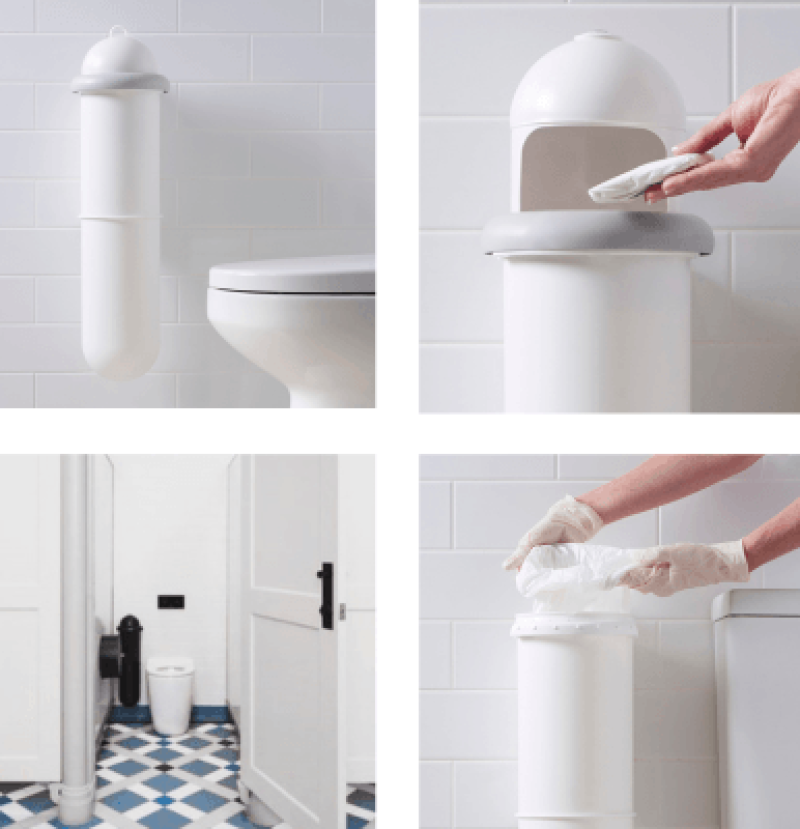
Regardless of which product someone uses, every washroom cubicle should have a dedicated sanitary bin for hygienic, discreet disposal. SaniPod™ New Zealand’s Pod™ Classic Auto and Pod™ Petite Auto is purpose-built for commercial and institutional washrooms – touch-free, odour-controlled, and designed to make sanitary disposal hygienic and seamless for every user.
For building owners and managers and facility teams, ensuring washrooms are equipped with proper sanitary disposal solutions remains one of the most direct, practical contributions any organisation can make to menstrual health – whatever product their users choose to use.
Chat to us about how our SaniPod™ sanitary units can improve your washroom
Get in touchProudly used by


