The Hidden Cost of Poor Sanitary Disposal in Commercial Buildings
10 November, 2026

The Hidden Cost of Poor Sanitary Disposal in Commercial Buildings
Poor sanitary disposal never appears in a budget as poor sanitary disposal. It arrives as an emergency plumbing invoice, as custodial hours nobody planned for, and as a tenant complaint that surfaces at renewal. Three separate lines, one cause, and no one in the building connecting them.
The cause is almost always a flushed period product, and the reason it was flushed is almost always that the stall offered nothing else. What follows is what that actually costs a commercial building, and how to work out your own number before the next budget meeting.
Where the money actually goes
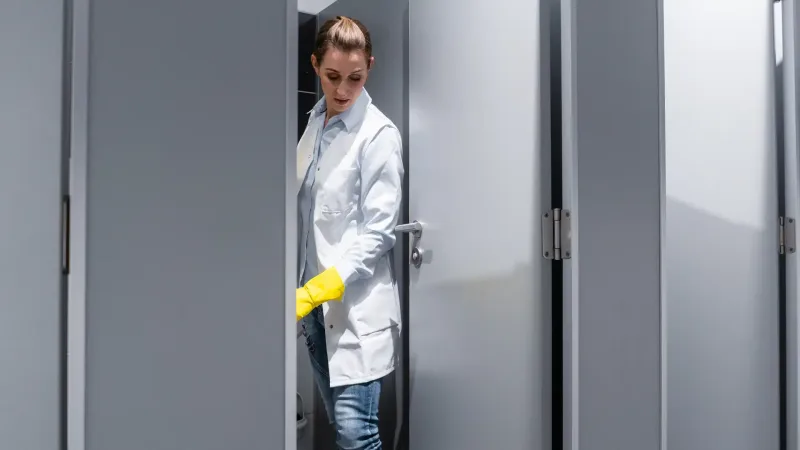
Pull a year of restroom spend apart and it lands in five places:
- Custodial labor.
- Consumables like paper, soap and liners.
- Plumbing service calls.
- Downtime, which is a closed restroom on a busy floor and the queue that forms at the next one.
- Reputation, which shows up as tenant complaints, visitor reviews and the conversation your property manager would rather not have.
Four of those are steady. Plumbing is the one that spikes, and in women’s and all-gender restrooms the spike has one main driver: period products that were flushed because there was no sanitary disposal receptacle in the stall.
We first made that argument in the true cost of not upgrading your sanitary disposal system. This piece is the version you can take to a budget meeting.
Why do people flush period products?
Can flushing tampons clog a toilet? Yes. Tampons are made to absorb and expand, up to ten times their original size once they’re wet, and they don’t break down in a sewer line the way toilet paper does. Pads and wrappers are worse. Once one catches in a bend, everything after it catches too.
So why do people flush? Almost never out of carelessness. Americans search Google for whether they can flush a tampon around 6,600 times a month, which tells you how many genuinely don’t know. The rest flush because the stall has no bin, or the bin is overflowing, or the lid is soiled, and nobody wants to touch it. SaniPod’s own research puts it at 8 out of 10: that many people won’t use a sanitary disposal unit they find offensive, and their waste goes down the toilet instead.
That’s a building problem, and buildings can fix it.

The costs that don't show up in the budget
Emergency plumbing calls
An emergency call costs more than scheduled work, and it rarely arrives at a convenient hour. A blockage in a shared riser can take more than one restroom out of service at once, on more than one floor. The invoice covers the visit. It doesn’t cover the hour your custodial lead spent redirecting people, or the second visit when the same stall clogs again.
Custodial time and exposure
Traditional box bins fill, overflow and get skipped. Each one means extra visits, double bagging and direct contact with waste for the people servicing your restrooms. Their time is a labor cost you can measure. Their exposure is something else. Custodial staff took a cleaning job, not a biohazard job, and a building that keeps blurring that line is making a choice about how it treats its own people.
Complaints, reviews and tenant retention
A restroom that fails is the one thing visitors remember about a building. In a leased property, it becomes a tenant complaint, then a renewal conversation, and the version your tenant gives their broker is worse than the version they gave you.
What proper disposal infrastructure changes
The fix is infrastructure, and it isn’t complicated.
- A dedicated sanitary unit in every women’s and all-gender stall.
- Touch-free, so people use it.
- A sealed liner, so custodians never handle waste.
- Sized for your servicing schedule, so it never overflows between visits.
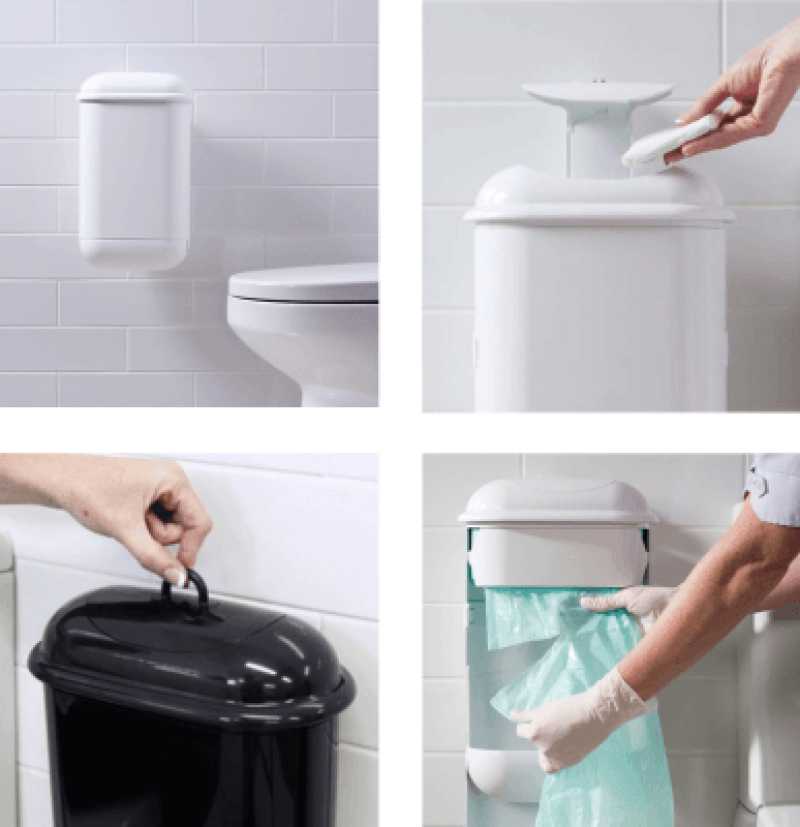
This is where SaniPod™ comes in. The Pod™ Petite Auto is wall-mounted and touch-free, and it uses a sealed liner cartridge that holds up to 26 liners. Servicing becomes a liner change rather than a waste-handling job. Capacity is 1.8 gallons (7 L), which is plenty for a busy stall between checks, and the liners are made with 70% recycled post-consumer materials.
For office and workplace buildings, our sanitary units for offices page shows how SaniPod units sit in a corporate restroom, and the Pod™ Petite Auto page carries the full specifications.

A simple way to put a number on it
You don’t need our figures. You need yours. Run this once, and you’ll have a number a CFO will accept.
- Count the women’s and all-gender stalls in the building that have no dedicated disposal unit.
- Pull twelve months of plumbing invoices and mark every one coded to a restroom.
- Ask your custodial lead how many hours a week go on sanitary unit servicing and clean-ups after overflows or flushed products. Add the hours any restroom was closed and the floor it was on.
- Then price sanitary disposal units and liners for those stalls over the same twelve months and set the two totals side by side. In most buildings, the comparison does the arguing for you.
Take the stall count to your next budget meeting
Fix the infrastructure in the stall, and all three of those lines shrink together, while the people using and servicing your restrooms get something better than improvising. The stall count is the only number you need to start with, and you can have it by Friday.
Get in touch with our team to walk through the stall count for your building, or find your local supplier through our US distributor network.
Talk to us about how our SaniPod™ sanitary units can elevate your restroom
Get in touchProudly used by


