Free Period Products at Work: How Leading US Employers Are Rolling Them Out
16 September, 2026

Free Period Products at Work: How Leading US Employers Are Rolling Them Out
The case for free period products at work has never been stronger – and the gap between where US employers currently stand and where employees expect them to be has never been more visible. According to a 2025 ISSA survey of 441 US facilities, only 38% of US workplaces provided free menstrual products in their restrooms. Nearly 36% of facilities managers surveyed had simply never considered it.
At the same time, a 2026 RMH Compass trend report found that when free menstrual products were made available at work, over 90% of employees reported greater emotional satisfaction, 70% perceived improved concentration, and 65% experienced improved mental wellbeing.
For HR leaders, office managers, facilities teams, and DEI leads, this is a straightforward, low-cost intervention with measurable returns. Here’s how the leading US employers are doing it and how yours can too.
Why the Workplace Gap Matters More Than Ever
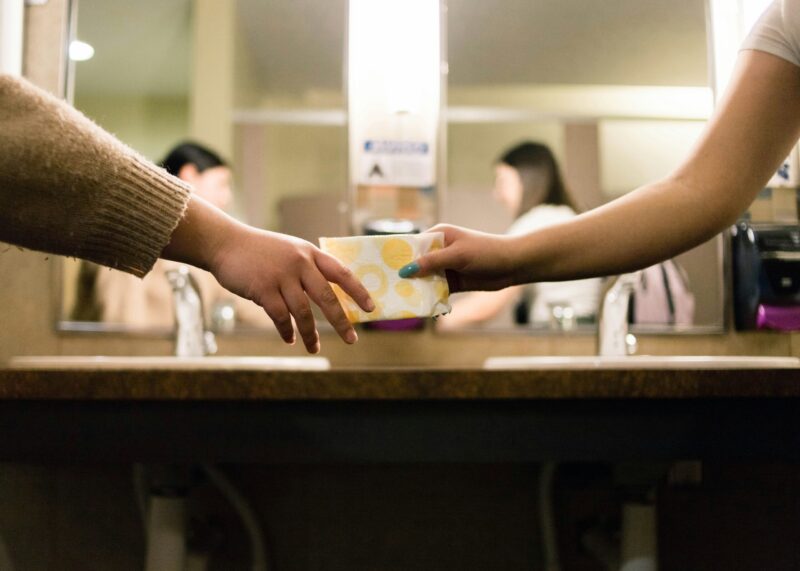
The cost of menstrual products in the US has risen sharply in recent years, which is up 22.1% since January 2020, outpacing general inflation by a significant margin. For employees who menstruate, this isn’t an abstract price index movement. It’s a monthly cost that compounds. And when an unexpected period hits at the office without access to products, the impact is immediate and disruptive.
A survey by the Free the Tampons Foundation found that 62% of menstruators who unexpectedly started their period at work had to take time away from work to manage the situation. That’s lost productivity, avoidable stress, and an entirely preventable experience for the cost of what amounts to a restroom supply line item.
As one workplace equity advocate put it in a widely shared guide for employees: “The restroom has toilet paper, soap, and paper towels, but somehow pads and tampons are still considered your personal responsibility.” That framing, period products as a restroom supply, not a perk, is proving to be the most effective way for HR and facilities teams to get budget approved quickly.
What Leading US Employers Are Already Doing
A growing number of US organisations have moved from conversation to implementation, providing period products in the office as a standard restroom supply. Notable examples include JPMorgan Chase and Toyota which have both adopted in-stall dispensing systems for free period products across their US office facilities, according to supplier data cited by restroom equity advocates.
The pattern across these examples is consistent: the organisations that do this well treat it as a facilities decision, not a benefits decision. It gets funded from the restroom supply budget, not HR. It gets implemented by facilities, not rolled into a wider policy process. And it gets communicated to employees simply and without fanfare.

What It Actually Costs & Why Cost Is Rarely the Real Barrier
Cost is the most commonly cited reason for not providing workplace period supplies but the numbers rarely justify the hesitation. According to a study by Girls Helping Girls, Period., the cost to an employer of providing free period products is approximately $2 to $4 per female employee per year. For a 200-person organisation with 100 female employees, that’s $200–$400 annually. Bulk pricing brings costs down further: The Organic Project offers 2,500 tampons or 1,200 pads for approximately $250 each at business rates.
For small businesses, an annual investment of $50–$200 is sufficient to stock a restroom adequately for a full year, according to estimates in the same Girls Helping Girls, Period study. By any reasonable measure, this is one of the lowest-cost, highest-return employee wellbeing investments available.
The real barrier, as the ISSA survey found, is not cost but awareness: more than a third of facilities managers simply hadn’t considered it. For HR and DEI leads, the job is often as simple as surfacing the data and making the ask.
The Part Most Rollouts Get Wrong: Disposal
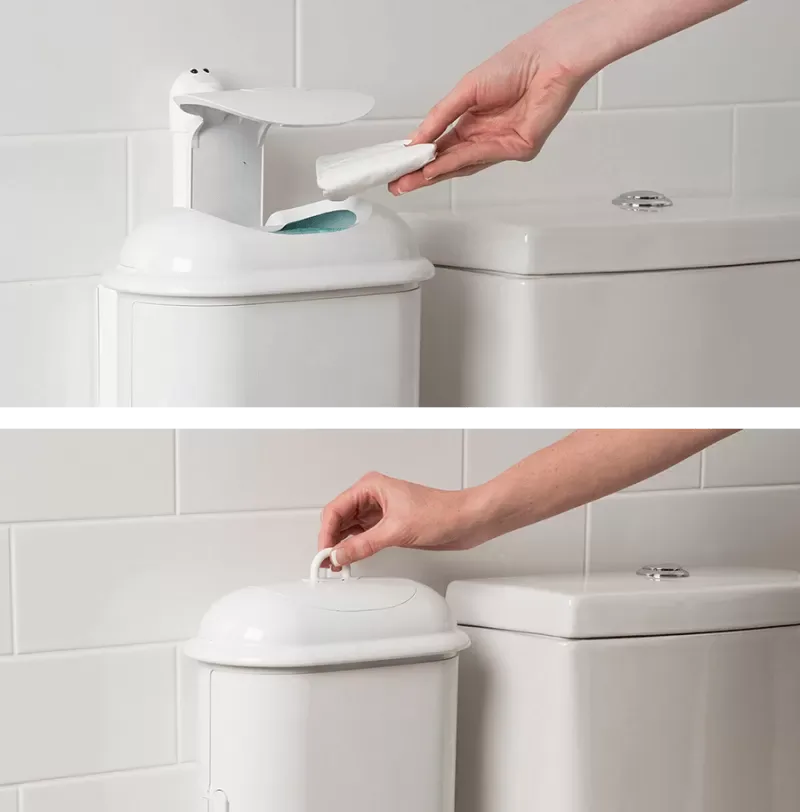
Providing free period products is one half of the equation. The other half, which many workplace rollouts fail to address, is disposal. Stocking a dispenser in a restroom without a proper sanitary disposal bin in every stall creates a new problem: employees have access to products but nowhere hygienic and discreet to dispose of them.
Without a dedicated waste receptacle inside each cubicle, employees are left to improvise: carrying used period products past colleagues to a central trash can, wrapping them in excessive toilet paper, or, most problematically for facility teams, flushing them. Flushed menstrual products are among the leading causes of workplace restroom plumbing blockages, creating maintenance headaches that cost far more than the disposal units that would have prevented them.
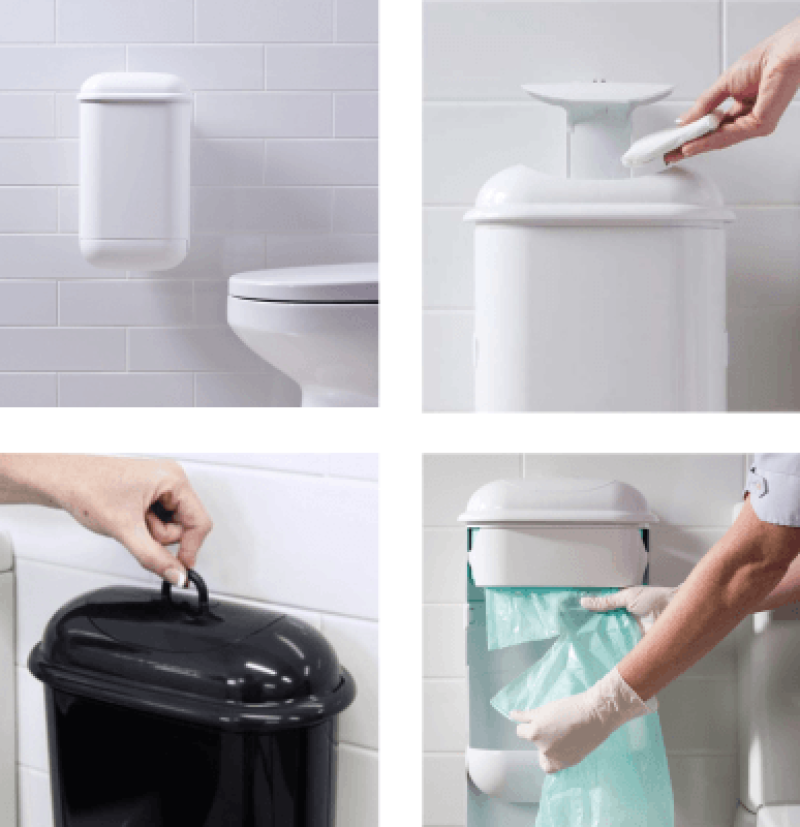
SaniPod’s Pod™ Petite Auto is designed specifically for this environment: a touch-free, odor-controlled sanitary disposal unit for commercial workplace restrooms that gives employees a discreet, hygienic disposal option inside every stall. Dispensers and disposal units should always be rolled out together – they are two sides of the same provision.

A Practical Rollout Playbook for HR and Facilities Teams
Based on how leading US employers have approached this, here’s a straightforward implementation framework:
- Frame it as a facilities issue, not a benefits issue: This keeps it out of the annual benefits review cycle and in the restroom supply budget, where it can be approved quickly and without a company-wide policy process.
- Audit your restrooms first: Count the stalls in your women’s and gender-neutral restrooms. Identify which stalls currently have sanitary disposal units (and which don’t). The sanitary disposal receptacle needs to be in every stall.
- Choose a supply model: Options range from bulk purchasing and self-restocking to managed service providers who handle delivery, installation, and restocking on a scheduled basis.
- Communicate simply and without fanfare: A brief, matter-of-fact note to employees – “We’ve added period products to all restrooms as a standard supply” – is all that’s needed. Overcommunicating it as a special initiative can inadvertently add stigma.
- Build restocking into the facilities checklist: Period product dispensers need regular restocking, just like soap and paper towels. Assign responsibility clearly and include it in the regular restroom maintenance schedule.
- Review after 60 days: Check dispenser usage levels and adjust restocking frequency accordingly. Usage often increases over the first few months as employees become aware of the provision.
The Bottom Line
Providing free period products at work is one of the simplest, most cost-effective steps an employer can take to signal genuine care for the people who work for them. The data on employee satisfaction, concentration, and wellbeing is clear. The cost is minimal. The implementation is straightforward. And the gap between the workplaces that have done this and those that haven’t is increasingly visible to the employees on both sides of it.
The employers leading on this aren’t treating it as a grand gesture. They’re treating it as a restroom supply decision and getting it done.
If your workplace is ready to take that step, SaniPod™ USA offers purpose-built sanitary disposal solutions designed for commercial office environments.
Explore our full range and pair your period product rollout with the disposal infrastructure it needs to work properly.
Talk to us about how our SaniPod™ sanitary units can elevate your restroom
Get in touchProudly used by


